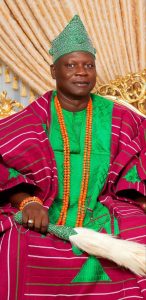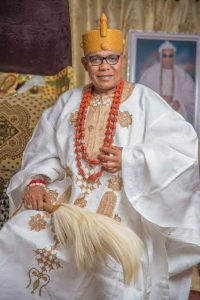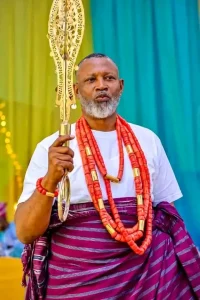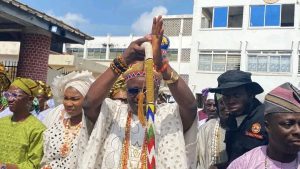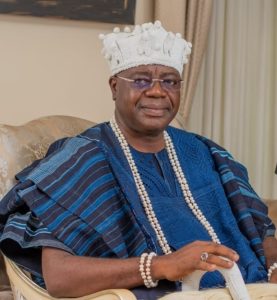

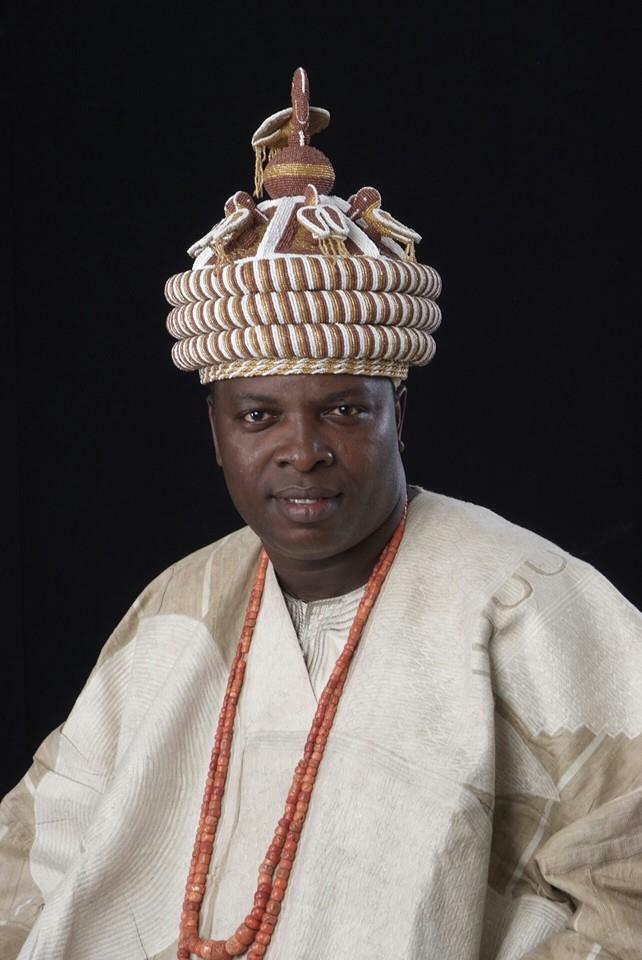
African Monarchs; His Royal Majesty, Alayeluwa Oba Adeoriyomi, Abdul Hakeem Oyebo, the Obateru of Egbin Kingdom, Lagos State, Nigeria.
Egbin (Egben); is a name coined from the word Milegbegben, meaning (I cannot accept insult). There is an historical fact behind this, which is known to the Ijebus. An event that occurred after the crowning of Owa Otutubiosun as the 13th Awujale of Ijebu land (1537 to 1539) gave credence to the name.
Egbin is a moderately sized town of over 150,000 inhabitants on a vast expanse of land, on which other towns and villages settled. Egbin is one of the ancient towns that are known and prominence among Ijebu towns and villages around 1617 during the reign of Oba Ademoyebo (Dagburewe of Idowa 1617), Oba Jadiara, (Dagburewe of Idowa in 1630) and Osin (Dagburewe of Idowa in 1660) from the dynasty of Oba Jadiara, who was subsequently recalled to become the Awujale of Ijebu land in 1660, the Dynasty of Osin, the son of Oba Jadiara and founder of eighteen (18) towns and villages that were then parts of the old Dagburewe colony in Ijebu Provincial boundary, up to Palava Island has never been in dispute by any authority or inhabitants of the areas. Oba Osin was subsequently recalled to become the Dagburewe of Idowa in 1660 after the recall of his father Oba Jadiara to become the Awujale of Ijebu land. Hence, the ancestral family pedigree (OMO OLOWO JOYE MEJI, O JE AWUJALE O TUN JE DAGBUREWE), (O JE DAGBUREWE O TUN JE AWUJALE).
Before Osins recall he install some of his children as Kings to reign over some of his towns and villages, amongst who were Oba Alaiyeluwa Adebogun Obateru who became the Obateru of Egbin Royal Kingdom as directed by Awujale and Dagburewe, his ancestral parents and Ifa Oracle to reign over his own domain around the water side, for prosperity; while Ayanolu reigned over Agbowa after Osins recall, Renade reigned at Gberigbe, Fusenkoye reigned at Agura, Ukusibo and her husband Atan reigned at Ebute Ikosi, Lufaderin (Olugbani Ope), his daughter migrated to Lagos and became the wife of Oba Ado-keme in the year 1640, and gave birth to Erelu Kutimehin who later married Laagba Ogbolu and the marriage was blessed with Ologunkutere, Opo-Olu, Osi-Okun and Laseran.
Oba Adebogun Obateru was blessed with a beaded crown, Opa Itele, Ipawo, Ide Owo, Ide Ese, and other paraphernalia of office including some deities such as Ota, Olokun, Esu, Ogun, Eluku, Alale. Other shrine that could be found in Egbin are Oju Bateru, Oju Ota (Ota gborowo Ebiti Ele), Oju Olokun, Oju Ogbe, Ogbaru, Oshugbo, Irele Awo Opa, Agemo, Epa, Jigbo.
On account of these historical facts, and in spite of its small population then, Egbin enjoys prominent place and position in the Ijebu province in the olden days long before the amalgamation of the Southern, Northern protectorates of Nigeria,
the cessions of Ito-Ikin up to Bayeku in 1892 to the Queen of Egland by the Awujale of Ijebu-Ode to be part of Lagos Colony, these could also be attested to in the supreme court proceeding/ judgment deliver on Akishe/ Odueko (Ijede) = vs = Odumeru (Baale Agbowa) and Dagburewe of Idowa in 1913 and the colony of Lagos in 1914 by Fredrick Lord Luggard, and in the history of the old western-region house of Chiefs before independence.
The title of Obateru was later degraded to that of Baale by the colonial masters without any explanation except the publication in the legal notice No. WRLN 22 OF 1959 entitled “Recognized Chieftaincies Order” which listed the title of Oba Bello Akingbade – the elevent (11th) Obateru of Egbin who reigned from 1942 to 1965 as Baale.
Series of petitions were written for the reversal of the status of Obateru of Egbin to the then Colonial Masters, the Western regional Government of Nigeria, the Kaolio Inquiry, etc., and finally, Honourable Justice W. Ajao Oshodi Standing Tribunal of Inquiry into the Chieftaincy Matters set up by Col. Raji Alagbe Rasaki- the then Lagos State Governor in the year 1991.
It is pertinent to point out that after independence, the Western Region government recommended that each traditional political institution in Yoruba land should seek government approval and upgrade their institutions in accordance with the Justice Adeyinka Morgan Commission of 1977. But the Egbin people could not make use of this opportunity to advocate for their constitutional right to restore their Obaship status at the Morgan Commission because ten years earlier, a new geographical entity called Lagos State had been created to which Egbin people now belong.
Like every other traditional monarch in Yoruba land, prior to colonization and independence, Egbin kingdom had existed without government recognition. The king assumed total dignity befitting royal office and imbued with the ritual power along with paraphernalia of royal office including the royal prerogatives of wearing the beaded crown. This array of royal ancestral force and dignity was extensively proffered in the oral testimonies and documentary evidence adduced in the course of proceedings at the Justice Oshodi Tribunal of Inquiry into the Baale of Egbin, a synopsis of which form part of the tribunals report to the State government in 1996.
The Lagos State government accepted in totality and in its entirety, the recommendation of the tribunal that the Obaship Status of Egbin is restored with immediate effect and the chieftaincy title is dully recognized by Lagos State Council of Obas and Chiefs.
Egben (Ilu Kekere Oko Ilu Bantata, Ko towon ru Ontawonlori); the power and energy town, is for a long time the Head of the Seven (7) Etigbo (Etigbo Meje), the Headquarters of Awo Opa Ijinla Fraternity, and one of the first to settle amongst its pears in Ijebu province of Lagos State of today.
The town Egbin, as it is called today has grown and no one has ever challenged its authority among its peers. Egbins next neighbor today on the west is Ijede, and it equally share boundary on the north with Gberigbe Orelade and Agura on the eastern side respectively, while in the south is the Lagos Lagoon.
The last 30 years have witnessed significant development in Egbin and its neighbouring towns and villages such as Ikorodu, Ijede, Igbogbo, Imota, Ibeshe, Ipakodo, Agura, Gberigbe, etc. especially after the establishment of Egbin Thermal Power Station (EGBIN PHCN) in Egbin town. The establishment of this Station had so much impacted on Ijede, our next door neighbour in terms of population and socio-economic development etc.
Egbin has so much developed that a lot of trading activities, industrial and commercial ventures now features in the town. As a matter of fact, Egbin can boast of the Egbin Thermal Station which generates electricity for the whole country and some West African States. The Egbin Thermal Station alone has a work force of about 1,500 people at Egbin. There is also the Nigeria Gas Company (NGC) a subsidiary of NNPC, AES Nigeria Barges Limited, also an America-Australia Ceramics Industry in Egbin, and most recently Chevron Nigeria Ltd has its Independent Power Project (IPP) on Agura/Egbin Land. There was a Wema Bank branch in Egbin and Zenith Bank business Units, the Wema Bank branch business unit has since been relocated to Ijede.
In fact, the only public secondary school around today was moved from Egbin land to Ijede after the acquisition of our land for the construction of the Thermal Station. Today, there are quite a number of private nursery and primary schools, NEPA Nursery/ Primary and Secondary schools within Egbin; though there is no government established school any more in the Town. Today, Egbin indigenes attend the primary and secondary school in Ijede.
The inhabitants of Egbin are predominantly traditional worshipers; presently, Islamic religion followers are about Sixty percent (60%). Islam is more than 100 years old in Egbin. Christianity followed quickly on the heel of western education after Imagbon War in 1892.
There is a well equipped Primary Health Center (Ijede Health Centre) on Egbin land that provides health care services to the two towns, Egbin, Ijede and environs.
Egbin also blessed with electricity, pipe-borne water supply from various boreholes sunk by individual companies, Local and State Government and the most recently constructed youth center by the Lagos State government for the use of youth within the Local Council Development Area, to complement the Power Holding Company Egbin sports and club facilities within PHCN housing estate Egbin and the yet to be develop Egbin water front to international standard for tourist attraction.
Missing at this moment is the construction of more roads and opening of access road to our lands beyond PHCN, Egbin.
FESTIVAL
Erenno: Festival celebrated in Idowa by Oba Dagburewe; to mark his first movement from Ijebu Ode to Idowa, its always celebrated in the month of March (Osu Erenno) with all Dagburewe descendants who are today Coronet kings in their various domains in attendance at Idowa Ijebu.
Eebi: This is Wooro period for the King (Oba), where all masquerades such as Agbo also known as Remireke, Okoro, Jigbo, Epa, Oluyepo, Asa, Agemo, Eluku, Oro, Pako comes out and Awo-Opa ijinla fraternity is celebrated. All other deities such Ota, Bateru, Esu (Elegbara), Olokun, Alale, Obatala, Obaluwaiye, Ogbaru, Ogbe and others are appeased and offered sacrifices. Its always celebrated in the month of March to May of every year.
Ogun: Giving sacrifice to Ogun (god of iron) for the King.
Iforisowa: This is the period at which Oloja pay homage to Obateru.
Orunfon: Cooking of Aafon for the whole town by the King.
Seere: Cooking of Ebiripo for the whole town by the King.
Ota festval: Giving sacrifice to Ota Hurricane (god of Water/ Land Storm) for the King. Its always celebrated towards the end of the month of December / early January.
Igbela: New yam festival.