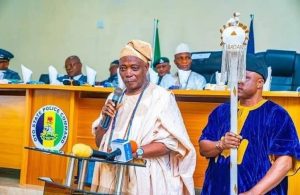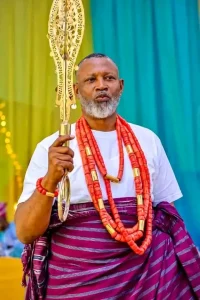

Mswati III. Mswati III (born Makhosetive; 19 April 1968) is the king (Swazi:
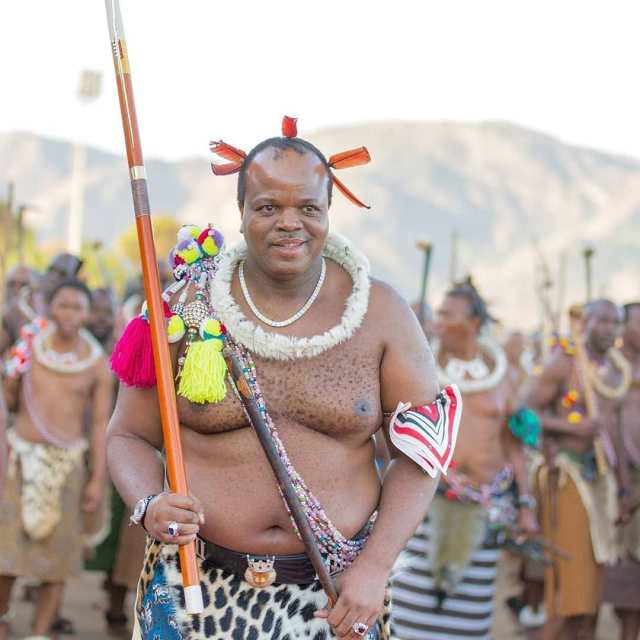
Mswati III. Mswati III (born Makhosetive; 19 April 1968) is the king (Swazi: Ngwenyama, Ingwenyama yemaSwati) of Eswatini and head of the Swazi Royal Family. … Mswati III is known for his practice of polygamy (although at least two wives are appointed by the state) and currently has 15 wives.
Kingdom: Eswatini
Nationality: Eswatini, Africa
Born: 19 April 1968
Parents: Sobhuza II, Ntfombi Tfwala.
Mswati III (born Makhosetive; 19 April 1968)[2] is the king (Swazi: Ngwenyama, Ingwenyama yemaSwati) of Eswatini and head of the Swazi Royal Family. He was born in Manzini in the Protectorate of Swaziland to King Sobhuza II and one of his younger wives, Ntfombi Tfwala.[3] He was crowned as Mswati III, Ingwenyama and King of Swaziland, on 25 April 1986 at the age of 18, thus becoming the youngest ruling monarch in the world at that time. Together with his mother, Ntfombi Tfwala, now Queen Mother (Ndlovukati), he rules the country as an absolute monarch. Mswati III is known for his practice of polygamy (although at least two wives are appointed by the state) and currently has 15 wives.[4] His policies and lavish lifestyle have led to local protests and international criticism.[5
Mswati III is one of many sons fathered by the previous king, Sobhuza II (who had more than 125 wives during his reign of 82 years),[8] and the only child of Ntfombi Tfwala, also known as Inkhosikati LaTfwala, one of Sobhuza’s younger wives. He was born at the Raleigh Fitkin Memorial Hospital in Manzini, four months before Eswatini attained independence from the United Kingdom. When he and his mother were discharged from the hospital, they went to live at one of Sobhuza’s residences, Etjeni, near the Masundwini royal residence. His birth name was Makhosetive (lit. “Kings of Nations”).
As a young prince, Makhosetive attended Masundwini Primary School and later Lozitha Palace School. He sat for the Swaziland Primary Certificate examination in December 1982 at Phondo Royal Residence and received First Class with merit in Mathematics and English. He developed a great interest in the royal guard, becoming the first young cadet to join the Umbutfo Swaziland Defence Force (USDF).
When King Sobhuza II died on 21 August 1982, the Great Council of State (the Liqoqo) selected the 14-year-old prince Makhosetive to be the next king.[9] For the next four years two wives of Sobhuza II, Queen Dzeliwe Shongwe (1982–1983) and Queen Ntfombi Tfwala (1983–1986), served as regent while he continued his education in the United Kingdom, attending Sherborne School (International College), before he was called back to ascend to the throne.
Mswati was introduced as Crown Prince in September 1983 and was crowned king on 25 April 1986, aged 18 years and 6 days, and thus making him the youngest reigning monarch until the ascension of King Jigme Khesar Namgyel Wangchuck of Bhutan on 14 December 2006; he was also the youngest head of state until Joseph Kabila took office on 26 January 2001 as President of the Democratic Republic of the Congo. The king and his mother, whose title is Indlovukati (“Great She-Elephant”), rule jointly.
Today King Mswati III is Africa’s last absolute monarch in the sense that he has the power to choose the prime minister, other top government posts and top traditional posts. Even though he makes the appointments, he still has to get special advice from the queen mother and council, for example when he chooses the prime minister. In matters of cabinet appointments, he gets advice from the prime minister. He ruled by decree, but did restore the nation’s Parliament, which had been dissolved by his father in order to ensure concentration of power remained with the king.
In 2004, Mswati promulgated a new constitution that allows freedom of speech and assembly for the media and public, while retaining the traditional Tinkhundla system. Amnesty International has criticized the new constitution as inadequate in some respects.
In an attempt to mitigate the HIV and AIDS pandemic in 2001, the king used his traditional powers to invoke a time-honoured chastity rite (umcwasho) under the patronage of a princess, which encouraged all Swazi maidens to abstain from sexual relations for five years. This was last done under Sobhuza II in 1971.[10] This rite banned sexual relations for Swazis under 18 years of age from 9 September 2001 and 19 August 2005, but just two months after imposing the ban, he violated this decree when a 17-year-old liphovela (royal fiancée) was chosen,[11] who became his 13th wife. As per custom, he was fined a cow by members of her regiment, which he duly paid.
Mswati has visited Taiwan seventeen times as of June 2018, and has promised to continue recognizing Taiwan instead of the People’s Republic of China.[12]
The king currently has 15 wives and 23 children. A Swazi king’s first two wives are chosen for him by the national councillors. There are complex rules on succession. Traditionally the king is chosen through his mother as represented in the Swazi saying Inkhosi, yinkhosi ngenina, meaning “a king is king through his mother”.[13] According to tradition, he can marry his fiancées only after they have fallen pregnant, proving they can bear heirs. Until then, they are termed liphovela, or “concubines”.